RamSoft vs Medicai for Vendor-Neutral Archives
Many radiology teams still store images across three separate archives because their current vendor-neutral archive cannot scale without new hardware purchases. That setup creates delays when specialists at different sites need the same study. The choice between RamSoft and Medicai now hinges on how each handles cloud growth and zero-footprint access without extra servers.
By the end of this article you will know the exact architecture differences, which compliance controls each platform provides, and the pricing models that fit multi-site networks. You will also see a clear recommendation for the group whose workflow demands immediate, hardware-free access across locations.
Quick Verdict: RamSoft vs Medicai for Vendor-Neutral Archives
Medicai provides a fully cloud-native VNA that eliminates on-premise hardware while RamSoft remains a hybrid solution with both cloud and on-premise options. The platform stores 1.7M+ studies and processes 50M+ API transactions yearly, which shows its capacity to handle enterprise-scale medical imaging data without local servers.
Its zero-footprint viewer allows clinicians to access DICOM studies directly through any web browser without installing software. This approach differs from traditional models that often require dedicated workstations and ongoing maintenance of local infrastructure.
Deployment typically completes faster with Medicai because no hardware procurement or server configuration is needed. Teams can begin uploading studies and accessing images through the web-based viewer almost immediately after account setup.
Data migration involves uploading existing DICOM studies through standard protocols rather than complex database transfers. The platform handles 2M+ imaging studies uploaded so far, which indicates the process works reliably for archive consolidation projects across multiple sites.
At a glance: how Medicai compares to RamSoft, Medicai for Vendor-Neutral Archives on the features that matter most.
| Feature | Medicai | RamSoft | Medicai for Vendor-Neutral Archives |
|---|---|---|---|
| Vendor-Neutral Archives | ✓ | — | — |
What Is Medicai?
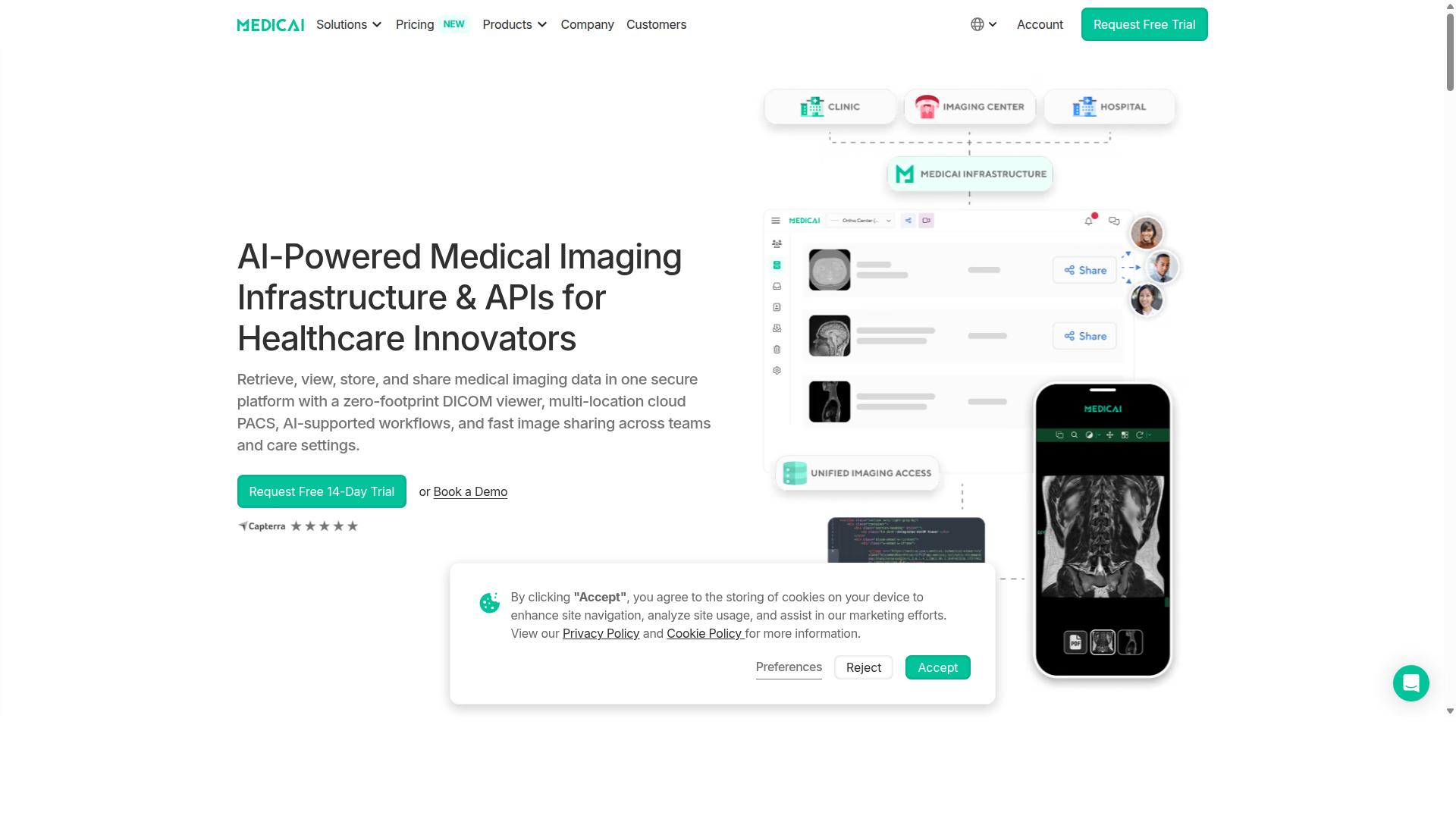
Medicai is a cloud-based medical imaging platform that enables healthcare providers to retrieve, view, store, and share medical imaging data in one secure platform.
Imaging Infrastructure as a Service forms the foundation of this solution. The platform operates as a SaaS offering that eliminates the need for on-premise infrastructure management.
This approach supports multi-location cloud PACS deployment across different care settings and sites. Healthcare organizations can consolidate their imaging data without maintaining separate physical servers at each location.
The system features a zero-footprint DICOM viewer that requires no local software installation. Users access imaging studies directly through web browsers on any device.
Medicai holds FDA and CEE clearance for its viewer component. This regulatory approval ensures the platform meets established safety and performance standards for medical imaging applications.
HIPAA and GDPR compliance governs all data handling processes. The platform incorporates encryption, audit logs, and user access controls to protect patient information during storage and transmission.
Healthcare providers can integrate Medicai with existing PACS, RIS, and radiology information systems through standard protocols like DICOM, HL7, and FHIR. This interoperability enables seamless data exchange between different imaging modalities and clinical systems.
The platform supports AI-supported workflows that assist with image analysis and routing tasks. These capabilities help radiology teams manage increasing study volumes while maintaining diagnostic quality.
Fast image sharing across teams enables quick collaboration between radiologists, specialists, and referring physicians. The system facilitates enterprise imaging strategies that consolidate data from multiple departments and locations.
What Is RamSoft?
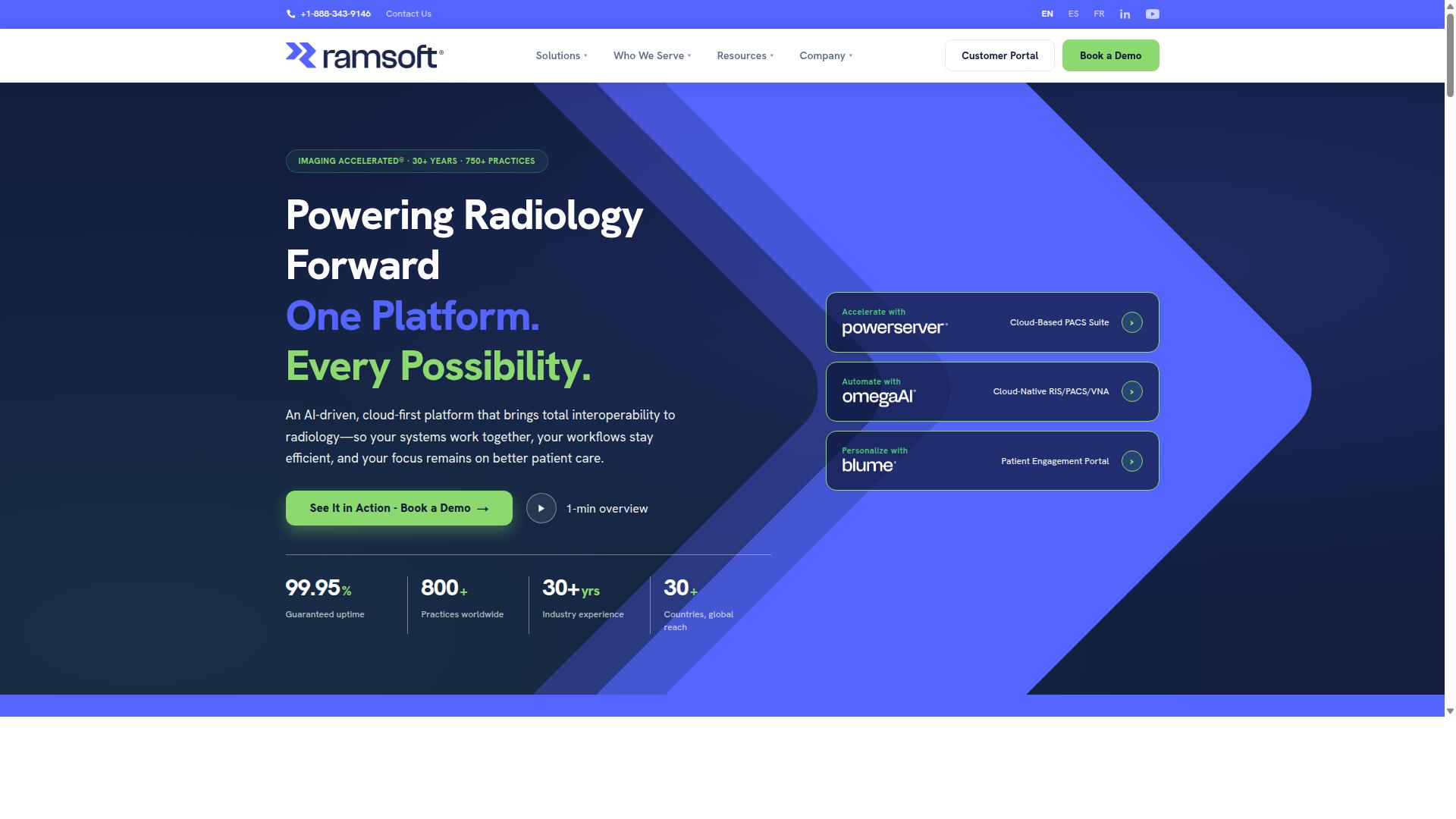
RamSoft is a radiology software provider offering PACS and RIS solutions that can be deployed either on-premise or through cloud hosting partners. The company focuses on traditional medical imaging workflows. Many radiology departments choose this type of platform when they need established PACS and RIS functionality for daily operations.
Traditional radiology software companies like RamSoft typically support DICOM standards for image storage and retrieval. They often work with HL7 messaging to connect with hospital information systems. This approach helps facilities maintain their existing radiology workflow while managing patient records across different locations.
Vendor-neutral archive capabilities represent one consideration when evaluating any PACS solution. A VNA stores medical images independently from specific viewing applications. This separation can support archive consolidation when organizations need to combine imaging data from multiple sources.
Many healthcare facilities seek flexibility in how they access their medical imaging data. On-premise deployments offer direct control over storage infrastructure. Cloud-hosted options can provide scalability for multi-site deployment scenarios without requiring local hardware maintenance.
Interoperability remains important for any enterprise imaging strategy. Standard protocols like DICOMweb, WADO, QIDO, and STOW help different systems exchange imaging studies. API integration capabilities can support connections with third-party viewers and other clinical applications.
Data security features such as encryption and audit logs address HIPAA compliance requirements. User access control mechanisms help protect sensitive patient information. These capabilities matter when organizations evaluate any medical imaging platform for long-term use.
What Is Medicai for Vendor-Neutral Archives?
Medicai functions as a vendor-neutral archive through its Cloud PACS and Vendor Neutral Archive modules that consolidate imaging data from multiple sources.
Medical facilities often maintain records across several systems. Archive consolidation brings those records into one accessible location. Medicai achieves this by ingesting DICOM studies from any modality or PACS and storing them in a single cloud repository.
The process begins with the Medical Imaging Uploader and DICOM Gateway. These tools accept images from different vendors and transfer them without format changes. Once stored, the data remains available for retrieval through the Cloud PACS interface.
Organizations can connect existing equipment to the platform using standard DICOM protocols. This approach eliminates the need to replace hardware during migration. The Vendor Neutral Archive then becomes the central point for all future image access and management.
Backup and Disaster Recovery features protect the consolidated archive. Routine copies safeguard against data loss while maintaining compliance with security requirements. Access controls limit who can view patient records and track usage through audit logs.
Multi-site deployments benefit from this centralized model. Clinics and hospitals connected to the same repository share images without physical transfer. The Medical Image Exchange module supports this workflow while preserving original study integrity.
Features Compared
Three critical feature areas separate these platforms: cloud architecture, security posture, and integration methods.
Vendor-neutral archives must support growing imaging volumes while meeting strict regulatory standards. The architecture behind each solution shapes its ability to scale across multiple sites and adapt to changing requirements.
Security models determine how safely patient data moves between locations and systems. Integration methods affect whether a vendor-neutral archive fits smoothly into existing radiology information systems and third-party tools.
Each approach carries different implications for multi-site deployments and long-term maintenance costs.
Cloud Architecture & Scalability
Medicai operates exclusively on cloud infrastructure while RamSoft offers both cloud and on-premise deployments.
Medicai's Starter plan provides 500 GB of cloud storage with unlimited user accounts, while the Standard plan supplies 2 TB of storage with the same unlimited accounts. Both plans remove the need for hardware purchases or server maintenance.
Automatic scaling handles increased study volumes without manual intervention. RamSoft solutions typically require hardware specifications or cloud resource allocation that must be planned in advance.
Multi-site organizations benefit from Medicai's ability to add connected locations through the Enterprise plan without rebuilding infrastructure. This model supports enterprise imaging strategies where imaging volumes grow unpredictably across different facilities.
Security & Compliance
Both platforms address HIPAA requirements, yet their implementation models differ significantly.
Medicai maintains HIPAA and GDPR compliance with encryption applied to data at rest and in transit. The platform follows OWASP security guidelines and includes audit logging capabilities for tracking access and modifications.
These measures support secure medical image exchange between healthcare organizations while maintaining regulatory compliance. RamSoft provides general compliance coverage without published details on specific encryption methods or audit capabilities.
Cloud-based storage with documented security protocols reduces the compliance burden on healthcare facilities. Organizations handling sensitive patient records across multiple jurisdictions find this approach simplifies their regulatory obligations.
Integration & Accessibility
Integration breadth and access methods determine how easily each system fits existing workflows.
Medicai processes 50M+ yearly API transactions and supports OHIF, MedDream, and FlexView viewers along with DICOMweb protocols. These connections enable image retrieval and study routing across different PACS and RIS environments.
Third-party viewers and standard protocols reduce the need for custom development when connecting new modalities or external reading services. RamSoft typically relies on HL7 and DICOM connectivity without documented support for modern web-based protocols.
Organizations using multiple viewing applications or planning teleradiology workflows find Medicai's integration approach reduces implementation time. The platform's API capacity supports high-volume image exchange scenarios common in enterprise imaging networks.
Pricing Compared
Medicai publishes transparent monthly subscription tiers while RamSoft pricing varies by deployment type and is quoted individually. This difference affects how radiology departments plan budgets for vendor-neutral archive solutions.
Starter tier costs $249 per month for 500 GB of cloud storage with unlimited user accounts. The plan suits smaller practices that need basic vendor-neutral archive capabilities without connected locations.
Standard tier costs $749 per month for 2 TB of cloud storage with unlimited user accounts. Organizations gain one connected location for their medical imaging workflows.
Yearly billing provides 15 percent savings. Starter drops to $209 monthly and Standard drops to $639 monthly when paid annually.
RamSoft requires direct quotes rather than public pricing. Hardware or licensing fees may apply depending on on-premise versus cloud deployment choices.
Enterprise customers can request custom pricing through Medicai. Per-study pricing options become available for high-volume imaging centers that need flexible vendor-neutral archive terms.
One-time DICOM Gateway setup costs $1,000 per location. This fee covers the technical connection between existing PACS systems and the cloud-based archive platform.
Who Should Choose Medicai
Organizations seeking a fully managed cloud VNA with predictable costs and rapid deployment benefit most from Medicai. Healthcare providers can move away from legacy systems while maintaining access to existing data. The solution targets facilities that need reliable image management without managing hardware infrastructure.
Multi-site health systems consolidating archives find strong value in this approach. Separate locations often operate independent PACS systems that create fragmented patient records. A single vendor-neutral archive brings all imaging data into one accessible repository. This consolidation reduces duplicate studies and improves care coordination across facilities.
Specialty clinics requiring quick image exchange represent another ideal use case. Orthopedics, neurology, oncology, and cardiology practices frequently share studies with referring physicians. Medicai serves these providers through its Patient Portal and supports teleradiology services. Clinical teams can access studies without complex network configurations or VPN connections.
Providers replacing legacy PACS hardware benefit from the transition to a managed cloud platform. Traditional on-premise systems require ongoing maintenance, security updates, and eventual hardware replacement. Medicai handles these operational demands while supporting DICOM and HL7 standards. This shift allows radiology departments to focus resources on patient care rather than system management.
Virtual care providers and telemedicine platforms also align well with this solution. These organizations need reliable image access across distributed teams without local server infrastructure. Medical education organizations and tumor boards gain similar advantages when reviewing studies from multiple sources. The platform accommodates these varied workflows through its SaaS delivery model.
Who Should Choose RamSoft
Facilities that prefer or require on-premise control, or already operate RamSoft PACS and RIS modules, may favor keeping their current vendor.
Healthcare organizations with strict data-residency policies often select RamSoft when local storage is mandatory. These institutions maintain complete ownership of hardware and software environments for regulatory reasons.
Long-standing relationships with traditional radiology software vendors also influence vendor selection. Some departments have invested years building workflows around existing RamSoft systems and prefer to extend those arrangements rather than explore alternatives.
Radiology groups managing single-site operations may find RamSoft adequate for their needs. These smaller practices often prioritize familiarity over the broader scalability options available through other vendors.
Organizations that already maintain PACS and RIS modules from the same vendor benefit from unified support channels. This arrangement simplifies troubleshooting and reduces the complexity of coordinating multiple vendors for different system components.
Who Should Choose Medicai for Vendor-Neutral Archives
Hospitals and imaging networks planning archive consolidation projects or requiring a single source of truth across disparate PACS choose Medicai's VNA.
The Medical Imaging Uploader and DICOM Gateway work together to move studies from multiple legacy systems. These tools accept data from existing PACS installations and prepare each study for storage in the Vendor Neutral Archive.
Studies enter the system through the DICOM Gateway, which handles standard DICOM transfers. The Medical Imaging Uploader processes batches of exams that require special handling or come from external sources. Both components feed data into the same central archive.
Teams can monitor ingestion progress through the Doctor Imaging Portal. This interface shows study status, import logs, and any files that need review before final storage.
Once stored, all images become available through the Medicai cloud PACS. Radiologists access studies from the DICOM Viewer while referring physicians use the Doctor Imaging Portal for reports and images.
The Vendor Neutral Archive supports additional services such as Backup and Disaster Recovery. These services protect the consolidated data and maintain access during system maintenance or unexpected outages.
Organizations that operate multiple sites benefit from the single archive model. Each location uploads studies through the same Medical Imaging Uploader and DICOM Gateway, yet all records remain accessible through unified portals.
The Medical Image Exchange feature allows secure transfer of studies to outside facilities when needed. This capability reduces the need for separate export workflows after archive consolidation is complete.
Final Verdict
Medicai's cloud-native VNA delivers faster deployment, transparent pricing, and extensive API connectivity for most modern healthcare providers.
The platform processes over 1 million studies each year and supports more than 300,000 visualizations. These figures demonstrate proven capacity for high-volume radiology environments.
Medicai maintains HIPAA and GDPR compliance while following OWASP security guidelines. The platform runs on Microsoft Azure infrastructure and supports 70 clinics and hospitals with over 10,000 active doctors.
RamSoft may suit facilities committed to on-premise infrastructure. Organizations preferring traditional server setups might find this approach aligns with existing IT policies and security frameworks.
Medicai offers 1.7 million studies currently in storage and handles 50 million API transactions annually. The system reduces diagnosis time by 65 percent through streamlined image access and collaboration tools.
Both solutions address vendor-neutral archive requirements, yet Medicai provides cloud scalability without hardware maintenance overhead. The platform supports DICOM, HL7, and FHIR standards for seamless interoperability across different systems.
Recommended Resources: